



Which path gives you the best Ethereum swap: a single DEX, a handful of pools, or a smart aggregator?
How do you pick the fastest, cheapest, and most reliable way to swap tokens on Ethereum when price, slippage, gas, and counterparty risk all tug in different directions? That single sharp question reframes a routine task—trading—into a trade-off problem. For DeFi users in the US who care about execution quality rather than slogans, the answer is rarely “always one protocol.” It’s about matching market structure, order size, and latency tolerance to an execution strategy. In practice today, that often means using a DEX aggregator like 1inch when you need fragmentation solved automatically, but knowing when a direct pool or a different aggregator can serve you better.
The rest of this piece unpacks that decision in concrete terms. I’ll use a common case—an ERC‑20 swap on Ethereum mainnet where you care most about receiving the best post-fee amount—to compare three approaches: swapping on a single DEX pool (e.g., Uniswap V2/V3), splitting the swap across a few curated pools, and sending your order through a smart aggregator that routes across many DEXes automatically. Along the way I’ll explain mechanisms, limitations, and a few heuristics you can apply in wallet or bot decisions.

Mechanics: what each approach actually does under the hood
Single-pool swap: you trade against one liquidity pool. Mechanism: the pool’s automated market maker (AMM) formula (constant product or concentrated liquidity) moves the price as you take liquidity. The advantage is predictability: you can estimate slippage from the pool depth and formula. The downside is vulnerability to price impact and to local liquidity shortage—large trades can move the pool price sharply, and arbitrageurs may extract value.
Curated multi-pool routing: you (or a smart wallet) pick two or three pools that together offer a better effective price than any single pool. Mechanism: split the trade manually or through a routing primitive to reduce price impact by taking depth from complementary pools. This requires on-chain knowledge of pool reserves and fee tiers and usually needs more gas than a single swap but less than exploring dozens of markets.
Aggregator routing (the multi‑DEX approach): an aggregator queries many venues, models price impact and gas, and issues a transaction that splits the order across multiple pools and DEXes in a single atomic execution. Mechanically, the contract computes an optimal route given current quotes and simulates the on-chain result, then executes a single transaction that implements the split. Aggregators can also leverage limit-order-like mechanisms, flash swaps, or boosted paths to capture liquidity inaccessible to a standard single-pool call.
Trade-offs and when each wins
Price for small retail trades: when you are swapping modest amounts (small relative to pool sizes), single pools are often enough—execution is simple, gas is predictable, and the marginal gain from complex routing is small. For many routine swaps under a few hundred dollars, the additional gas and complexity of an aggregator rarely pays off.
Price for medium-to-large trades: as order size grows, aggregators tend to win because they reduce aggregate price impact by sourcing liquidity across venues. If you need to swap an amount that represents meaningful share of a popular pool, splitting across multiple pools can materially lower slippage and improve the net received amount despite slightly higher gas.
Latency and failure sensitivity: single-pool swaps are simpler and fail less often when the contract interaction is straightforward. Aggregated routes are more complex; they can occasionally fail if on-chain conditions change between route computation and transaction mining. Robust aggregators mitigate this with conservative quoting windows, but higher volatility on Ethereum can still cause slippage reverts. If you require guaranteed execution at a fixed price, on-chain limit orders or off-chain settlement primitives may be more appropriate.
Gas and transaction cost: aggregators can raise gas slightly because they execute multiple calls or complex logic in one transaction, but they can save you money overall if the improved rate outweighs the extra gas. In times of high base fees (the normal US market consideration when many trades are competing), gas sensitivity can flip preferred strategy: a marginally worse price but lower gas might be better for small swaps.
Limits, failure modes, and what aggregation DOESN’T solve
Liquidity illusions and sandwich risk: aggregators can find the best static split at quote time, but they cannot prevent front-running or sandwich attacks if you broadcast without protection. Some aggregators integrate MEV protection or permit private relays; the presence of such features matters for large or illiquid swaps.
Price oracle dependency and simulation fidelity: aggregators rely on off-chain or on-node simulations to estimate execution. If simulation assumptions (other pending transactions, miner behavior) prove wrong, execution may revert or return a worse price. This is a structural limit—you can reduce but not eliminate this risk.
Regulatory and custodial boundaries: for US users, using aggregators that route through less transparent venues or through on/off ramps should trigger extra diligence. Aggregation doesn’t alter counterparty risk profiles embedded in the venues it uses; if one route touches a DEX with problematic governance or incentives, that risk still exists.
Case study: swapping a mid-size amount of USDC for ETH on Ethereum mainnet
Imagine swapping $25,000 of USDC for ETH. A single deep pool might exhibit a price impact of, say, X% (we avoid fabricated numbers here—the exact value depends on reserves and fee structure). A smart aggregator examines dozens of pools—Uniswap V3 positions at multiple fee tiers, SushiSwap, Balancer, Curve for stable-heavy legs, and possible stable-to-wETH hops—and splits the order to minimize the weighted average price you pay. The aggregator also factors in gas to ensure the net received amount after execution and fees is maximized.
Heuristic outcome: an aggregator often reduces slippage enough to justify higher gas for this mid-size trade. But the aggregator’s benefit depends on pool fragmentation: if most liquidity is concentrated in a single deep Uniswap V3 range that already offers low impact, the marginal gain from routing is small. Conversely, if liquidity is spread across fee tiers or fragmented across venues, aggregation delivers clear value.
Practical framework: three heuristics to decide in your wallet
1) Size rule: compare your order to pool depth. If your order is under a few percent of the largest pool’s available depth at your desired slippage, single‑pool swaps are fine. If above, prefer aggregation or staged swaps.
2) Volatility and time-sensitivity: if you need immediate execution during high volatility, prefer simpler routes with tighter slippage or use private relays/MEV-resistant options when using aggregators. Aggregators that offer guarded quoting help but don’t eliminate miner/MEV risks.
3) Gas-sensitivity: when gas is a large fraction of your order value (small trades during high base fees), prioritize lower-gas simple swaps even if the price is slightly worse. For large orders, optimize for best net received amount even if gas rises.
Where aggregation could improve and what to watch next
Improvements to watch: better MEV protection layers, more accurate on-chain simulation, and tighter integration between aggregators and private relays would reduce execution risk. Watch for changes in fee dynamics on Ethereum—if gas stays high relative to trade sizes, aggregated routes will need to be more aggressively value-accretive to remain preferable.
Signals that should change your behavior: expanding concentration of liquidity in a single protocol (less need for splitting), rising MEV incidents in your token pair (use protected execution), or sudden protocol-level upgrades that alter fee models or AMM formulas (reassess routing models).
For a practical place to explore aggregator options and documentation, see the 1inch resources where implementation details, supported chains, and routing philosophies are presented in user-facing form: 1inch defi.
FAQ
Q: Will an aggregator always get me the best price?
A: No. Aggregators maximize expected net output based on available on-chain quotes and simulation. They usually find better prices for medium-to-large trades or highly fragmented pairs. For tiny trades or when a single pool already dominates liquidity, a direct swap may be simpler and effectively identical.
Q: Does using an aggregator increase my risk of frontrunning or MEV?
A: Aggregation can increase exposure to MEV if it relies on public mempool quotes and doesn’t route transactions through private channels. Many aggregators implement MEV mitigation strategies; check whether the aggregator supports protected execution, private relays, or optimistic slippage safeguards before sending large orders.
Q: How should US users think about compliance and counterparty risk with DEX aggregators?
A: Aggregation is primarily an execution layer; it does not remove the underlying protocol risks of the DEXes it touches. US users should perform due diligence on the tokens and venues involved, be mindful of sanctions and regulatory guidance, and consider custodial vs. non-custodial trade-offs for larger positions.
Final takeaway: think of swap execution as multi-dimensional optimization, not a binary choice. Size, gas environment, volatility, and MEV exposure jointly determine whether a simple pool or a sophisticated aggregator is the smarter path. Equip your wallet choices with the three heuristics above, and treat aggregators as powerful tools that solve fragmentation—usefully, but not magicly. The best trade is the one that balances price, certainty, and risk for your specific context.
Chia sẻ bài viết





Tin sản phẩm

PHƯỚC BÌNH LAKEVIEW – SIÊU SẢN PHẨM KHU ĐÔ THỊ NAM SÂN BAY

NHỮNG TIỆN ÍCH HẤP DẪN DẪN TỪ SẢN PHẨM GOLDEN CENTER

GOLDEN CENTER – VỊ TRÍ TRUNG TÂM KẾT NỐI GIAO THÔNG HOÀN HẢO
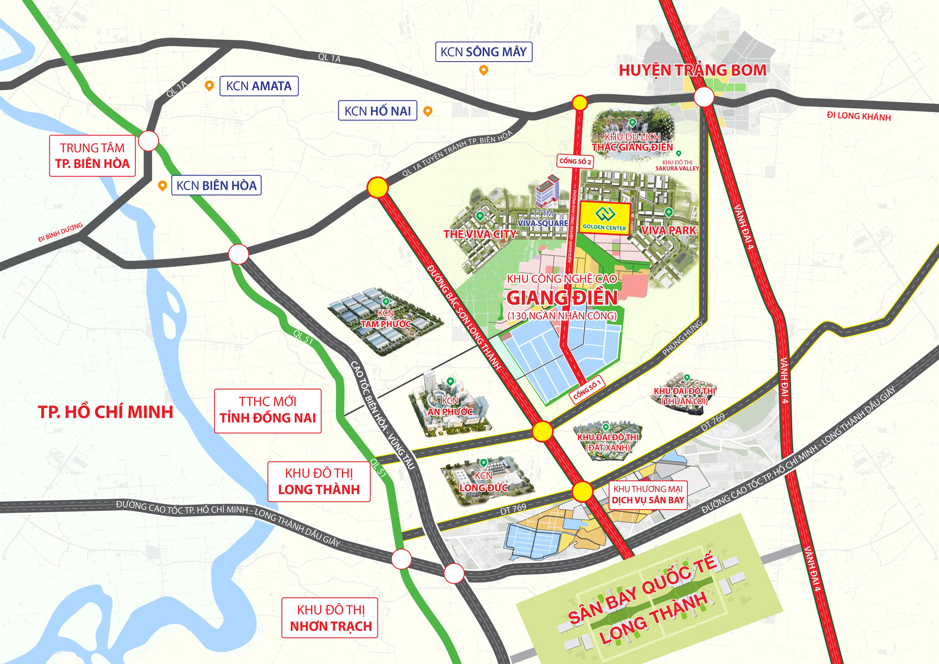
GOLDEN CENTER – SỨC HÚT CỦA VỊ TRÍ TRUNG TÂM

KHU DÂN CƯ AN NGÃI HƯỞNG LỢI TỪ QUY HOẠCH CỬA NGÕ BIỂN BÀ RỊA – VŨNG TÀU
Tin thị trường

BÌNH THUẬN SẴN SÀNG CHO LỄ KHỞI CÔNG CAO TỐC VĨNH HẢO – PHAN THIẾT – DẦU GIÂY NGÀY 30/9

CAO TỐC, SÂN BAY, BẾN CẢNG: AI KHÔNG LÀM THÌ ĐỨNG SANG MỘT BÊN !

(CAFEF.VN) – HAI YẾU TỐ “VÀNG” SẼ TẠO SỨC BẬT CHO THỊ TRƯỜNG BĐS NGAY KHI DỊCH BỆNH KẾT THÚC

(CAFEF.VN) – TRONG KHÓ KHĂN THÁCH THỨC, NHIỀU NHÀ ĐẦU TƯ BĐS COI ĐÂY LÀ CƠ HỘI VÀ LẠC QUAN VÀO THỊ TRƯỜNG TRONG DÀI HẠN

(CAFELAND.VN) – ĐỒNG NAI: HƠN 3.100 TỈ ĐỒNG XÂY TUYẾN ĐƯỜNG TRUNG TÂM TP. BIÊN HÒA
Hoạt động